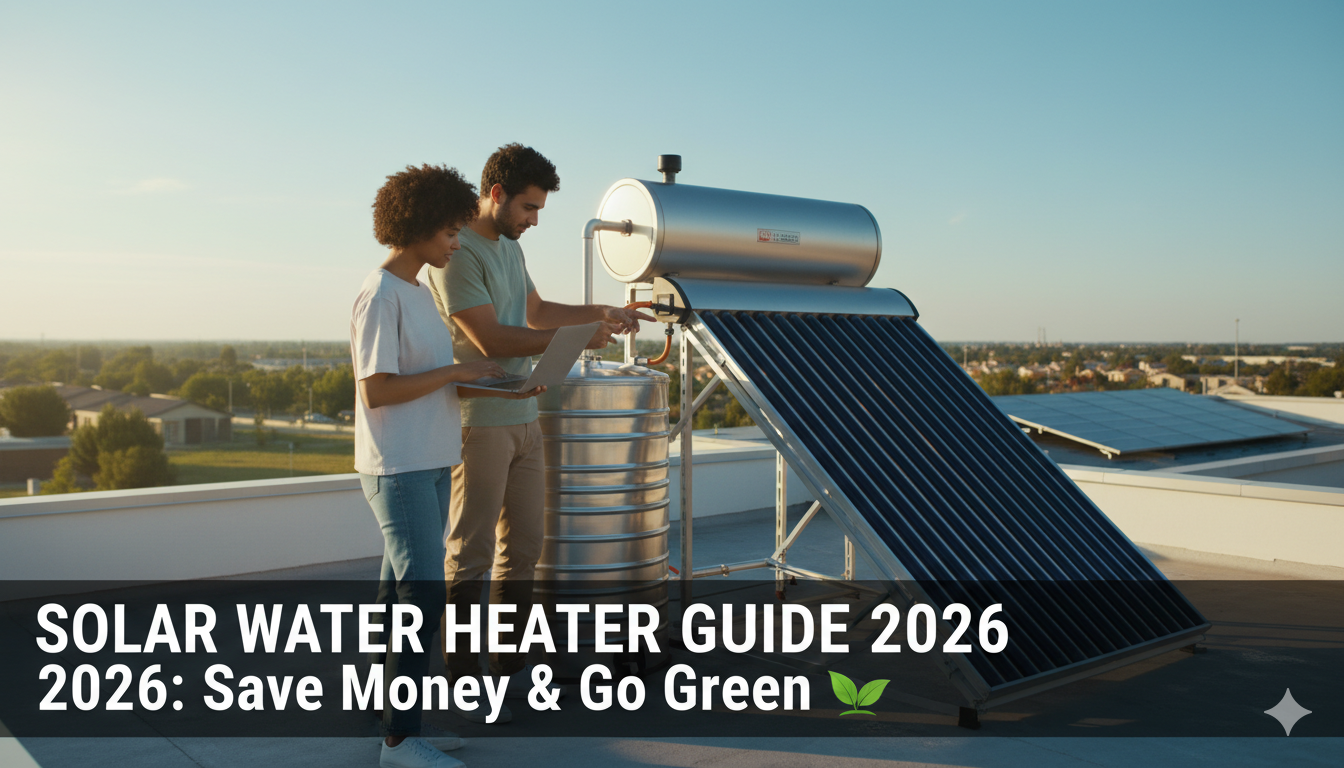
Do you love a warm shower in the morning? Most of us do! But did you know that heating that water is one of the most expensive things your home does? It can take up a huge chunk of your monthly power bill. That is where a solar water heater comes in to save the day. Think of it like a giant battery that uses the sun instead of electricity. It sits on your roof, catches the sunlight, and turns it into heat for your bath. It is like getting a gift from the sky every single day!
In this guide, we will explore why so many families are switching to solar. We will look at how these systems work, how much they cost, and how to keep them running perfectly. Whether you want to help the planet or just keep more money in your pocket, a solar water heater is a smart choice for 2026. Let’s dive in and see how the sun can make your water steamy and your bills tiny!
What Exactly is a Solar Water Heater?
A solar water heater is a clever machine that uses sunshine to warm up the water you use at home. Unlike regular heaters that use gas or electricity, this one uses “solar collectors.” These are usually flat panels or glass tubes placed on your roof. They soak up the sun’s rays just like a dark shirt gets hot when you stand outside in the summer. Once that heat is trapped, it moves into your water, making it nice and warm for your showers, laundry, and dishes.
How Does the Sun Heat Your Water?
It sounds like magic, but it is actually simple science! Inside the solar water heater panels, there are pipes. When the sun hits the panels, the pipes get very hot. Cold water flows through these pipes, picks up the heat, and then travels into a big, insulated tank. This tank is like a giant thermos. It keeps the water hot for a long time, even after the sun goes down. Most systems also have a “backup” heater just in case it stays cloudy for many days in a row.
Different Types of Solar Water Heaters
Not every solar water heater is the same. There are two main families: active systems and passive systems. Active systems use small electric pumps to move the water around. These are great if you live in a place where it gets very cold because they can use special “antifreeze” liquid to keep pipes from bursting. Passive systems don’t use pumps at all. They rely on the fact that hot water naturally rises. These are usually cheaper and last a very long time because they have fewer moving parts to break.
Comparing Active and Passive Systems
Choosing between an active and a passive solar water heater depends on your home. Active systems are more “high-tech” and can be more efficient, but they cost a bit more to set up. Passive systems are “low-tech” and very reliable. If you have a big family that uses a lot of hot water, an active system might be best. But if you want something simple that rarely needs a repair, a passive system is a fantastic way to go.
Why Should You Switch to Solar Hot Water?
The biggest reason to get a solar water heater is the savings! Imagine cutting your water heating bill by 50% to 80%. Over a few years, the system actually pays for itself. Plus, it is great for the Earth. By using the sun, you are not burning fossil fuels. This means you are helping to keep the air clean. It is a “win-win” for your wallet and the environment. In 2026, being eco-friendly has never been easier or more affordable.
The True Cost of Installing a System
When you first look at the price of a solar water heater, it might seem high. Prices usually range from $2,500 to $9,000 depending on the size and type. However, you have to look at the long-term picture. Many governments offer “tax credits” or rebates that can cover 30% or more of the cost! When you add up the monthly savings on your electric bill, most people find that the system pays for itself in about 5 to 7 years.
Understanding Solar Collectors
The “collectors” are the most important part of your solar water heater. There are two popular kinds. Flat-plate collectors look like flat boxes with glass tops. They are very common and work well in most places. Then there are evacuated tube collectors. These look like a row of glass thermos tubes. They are incredibly efficient and can even heat water on cloudy days or in freezing weather. If you live in the north, the tubes are usually the better pick!
Keeping Your System Happy and Healthy
To keep your solar water heater running for 20 years or more, you need to show it a little love. Don’t worry, it’s not hard! About once a year, you should check the panels to make sure they aren’t covered in dust or leaves. If they are dirty, they can’t catch the sun as well. Also, it is a good idea to have a professional check the “anode rod” every few years. This little rod protects your tank from rusting, making sure your system stays strong.
Is Your Roof Ready for Solar?
Before buying a solar water heater, take a look at your roof. Does it get a lot of sun during the day? The panels work best when they face south. You also want to make sure no big trees are casting shadows on your roof. If your roof is very old, you might want to fix it before putting the panels on. A good installer can look at your home and tell you exactly where the panels should go to catch the most “free” energy.
What Happens on Cloudy Days?
A common question is: “What happens if it rains for a week?” Your solar water heater won’t leave you with a cold shower! Almost every system comes with a backup heating element. This works just like a standard electric water heater. If the water in the solar tank isn’t hot enough, the backup kicks in automatically. This means you get the best of both worlds—free hot water when it’s sunny and guaranteed hot water when it’s not.
Solar vs. Electric: The Big Comparison
| Feature | Solar Water Heater | Standard Electric Heater |
| Upfront Cost | High ($2,500 – $9,000) | Low ($500 – $1,500) |
| Monthly Bill | Very Low (Save 80%) | High |
| Lifespan | 20+ Years | 8 – 12 Years |
| Planet Impact | Very Low / Green | High / Uses Grid Power |
| Maintenance | Low (Annual Clean) | Very Low |
Frequently Asked Questions (FAQs)
1. Can a solar water heater work in the winter? Yes! Even when it is cold outside, the sun still shines. While the system might not get the water as hot as it does in July, it still does a lot of the work. Your backup heater will just do the rest!
2. How long do these systems last? Most high-quality systems last between 15 and 25 years. If you take care of the collectors and the tank, they can even go longer than that.
3. Do I need a special permit to install one? Usually, yes. Most cities want to make sure the panels are safe and won’t blow away in a storm. Your solar installer will typically handle all the paperwork for you.
4. Will it work at night? The panels don’t work at night, but your tank acts like a battery. It stores the hot water made during the day so you can use it for your evening or early morning shower.
5. Is it hard to maintain? Not at all! Just make sure the glass is clean and check for any leaks once in a while. It is much easier to maintain than a car or even a large lawn.
6. Can I install it myself? Unless you are a pro at plumbing and roofing, it is best to hire an expert. You want to make sure the pipes don’t leak and the panels are bolted down securely.
Conclusion: Is Solar Right for You?
Choosing a solar water heater is one of the best moves you can make for your home in 2026. It is a proven way to save money while being kind to our planet. While the start-up cost can feel big, the “free” hot water you get for the next 20 years makes it a fantastic investment. Just imagine never worrying about a rising electric bill again! If you have a sunny roof and a family that loves hot showers, this is the perfect time to go solar.
About the Author