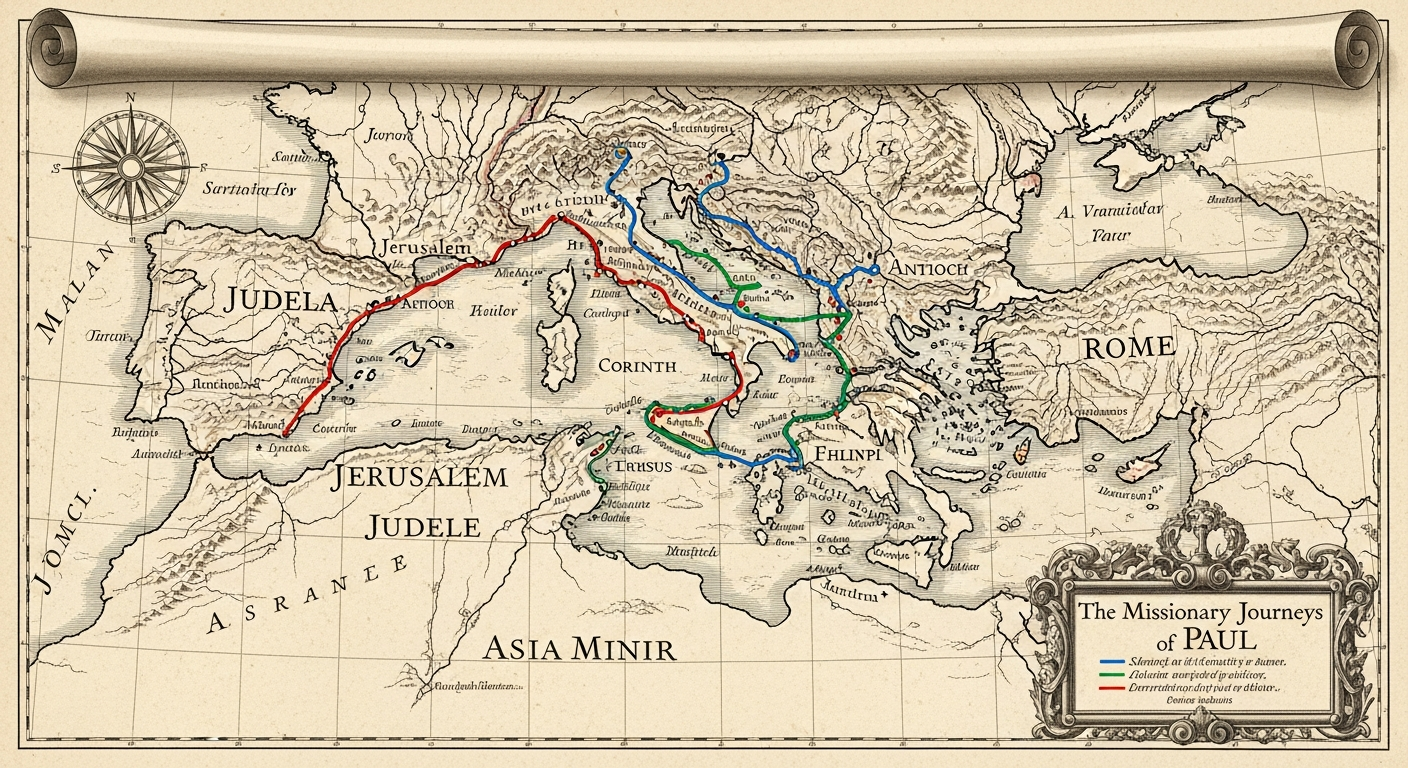
Paul’s missionary journey map is a helpful way to see how Paul traveled to share his message. When you look at a map like this, you can easily follow the places he visited and understand how far he went. Many people love learning about these journeys because the map makes everything feel clearer and more real. It shows his path through different cities, roads, and seas, helping readers imagine his long trips. Using a map also makes it easier for beginners or kids to understand the story without feeling confused.
Paul’s missionary journey map also teaches us how important planning and direction were in Paul’s life. Each trip had special stops, and each stop had a purpose. When we follow his journeys on a map, it becomes like reading an adventure story, but with real places and real history. This helps young learners, new readers, and blog visitors enjoy the topic without feeling bored. A simple map can turn a big story into something fun, easy, and friendly to learn.
Paul’s Missionary Journey Map: Easy Story Guide for Beginners
Paul’s missionary journey map helps us see the long roads Paul walked to share his message with many people. When we follow his path on the map, it feels like watching a simple story come to life, where every stop has a special meaning. The map shows how Paul moved from one city to another, crossing seas, meeting new people, and teaching important lessons. For many new learners, the map makes things less confusing because it shows all the places clearly. Kids and beginners enjoy this because they can picture Paul’s travel like a fun adventure. The map also helps us understand how big his mission was and how far he went to spread hope. It turns history into something easy and friendly, making learning feel light and enjoyable for everyone who reads it.
Why Paul’s Missionary Journey Map Helps Us Learn Better
Paul’s missionary journey map makes learning simple because it gives us a clear picture instead of long, hard words. When we see where Paul traveled, it helps our mind understand his story faster. Many people find maps helpful because they show the whole journey in one place, making it easy to follow each step. The map also helps us see how the cities were connected and how Paul moved along the roads. This makes the story feel real instead of just something we read. For young readers, the map turns the lesson into a fun and friendly guide. It helps them remember what they learn because pictures and places stay in the mind longer. That is why using a map to study Paul’s trips makes everything easier and more exciting.
Places Paul Visited on His Missionary Journey Map
Paul visited many places during his journeys, and the missionary map helps us see each stop clearly. When we look at the map, we can follow the path from one city to the next without getting confused. Paul traveled through places like Antioch, Cyprus, Iconium, and many more towns that were important to his mission. Each place on the map shows a small part of Paul’s big story, and together they help us understand his whole journey. Kids and new learners like seeing these names on a map because it makes everything easier to remember. The map also helps us notice how far Paul traveled, which shows how dedicated he was. By looking at these places, we can imagine Paul talking to people, teaching them, and helping them learn new things. This makes the story feel real and simple to follow.
How Paul Traveled: Simple Look at Roads, Cities, and Paths
Paul’s missionary journey map shows the roads, cities, and paths he used on his trips, making his journey easy to understand. When we see the map, we can tell which places Paul visited by land and which ones he reached by sea. This helps us imagine how he traveled during that time, even without modern transportation. The roads on the map show us the long distances he walked, proving how strong and brave he was. The cities marked on the route help us picture where he met people and shared his message. Each path tells a small part of his adventure, and the map brings all the pieces together. Kids and beginners enjoy this simple layout because it feels like following a trail. It makes learning fun and helps the story stay clear in our minds.
Paul’s First Mission Trip on the Journey Map
Paul’s first mission trip becomes easy to understand when we follow it on his journey map. The map shows how he began in Antioch and then moved through different towns like Cyprus and Pisidian Antioch. These places help us learn where he taught people and spread his message for the first time. The map lets us see the order of his stops, which makes the story feel neat and organized. Many new learners like how the map turns the journey into a simple line of connected places. It also helps us picture Paul meeting new groups of people and starting new communities. The first mission trip is important because it shows where everything began, and the map helps us see that clearly. This makes the story easy, friendly, and fun to explore.
Paul’s Second Mission Trip Explained with Map
Paul’s second mission trip looks clearer when we explore it through the journey map. This trip shows how Paul traveled to places like Philippi, Thessalonica, and Corinth. Each stop on the map helps us understand how Paul kept teaching and encouraging new believers. The map shows paths across land and sea, making it simple to see the direction he followed. Kids and beginners enjoy this because it feels like tracing a long adventure line. The map also shows how Paul met new challenges but stayed strong throughout his journey. By seeing all the locations together, we can picture how far he traveled and how important this trip was. The second mission trip becomes easier to remember because the map turns it into a simple visual story.
Paul’s Third Mission Trip Seen Through the Map
Paul’s third mission trip becomes simple when we look at it through the journey map. The map shows his path through cities like Ephesus, Troas, and Jerusalem. These places help us see how Paul continued teaching and supporting growing communities. Kids and new learners find the map helpful because it shows the order of the trip without confusing words. It also helps us see how long the journey was and how many places Paul visited. Each line on the map marks another part of his hard work. This makes the story feel like a long but clear adventure. The third mission trip shows how strongly Paul believed in his work, and the map helps us understand it easily.
Simple Lessons We Learn from Paul’s Missionary Journey Map
Paul’s missionary journey map teaches us many simple lessons that even young readers can understand. It shows us how Paul stayed strong and brave during his long travels. By looking at the map, we learn how he visited many places to help and teach people. The map also reminds us that learning can be easy when we have clear pictures to guide us. Kids enjoy following the lines and locations because it feels like tracking a story on a treasure map. Paul’s journeys teach us about courage, kindness, and sharing good messages. The map helps these lessons stay in our mind in a simple and friendly way.
How to Use Paul’s Missionary Journey Map for Study
Using Paul’s missionary journey map for study is a simple way to understand his story better. The map shows all the places in order, which helps us follow the path without getting confused. Kids and beginners can trace the lines to see where Paul went first, next, and last. This makes learning feel more like exploring than reading a hard lesson. The map also helps us remember the place names because pictures stay in our minds longer. Teachers and students both enjoy using maps because they make big stories easier to explain. With this map, studying Paul’s life becomes clear, fun, and easy to understand.
Conclusion
Paul’s missionary journey map makes his long trips simple to understand, even for young learners. When we look at the map, the places and paths turn into a clear story that is not confusing. It helps us see where Paul went, how he traveled, and why each stop mattered. The map turns history into something easy and friendly, making learning feel light and enjoyable.
This journey map also reminds us how brave and strong Paul was as he traveled to many cities. Seeing all his routes on the map helps us picture his adventures like a real-life story. For kids and beginners, the map is a helpful guide that keeps everything clear and simple. It makes the story fun to follow and easy to remember.
FAQs
Q: What is Paul’s missionary journey map?
A: It is a simple map that shows all the places Paul visited during his mission trips.
Q: Why is Paul’s missionary journey map helpful?
A: It helps readers follow Paul’s travels easily without getting confused.
Q: What can we learn from Paul’s missionary journey map?
A: We learn about the cities Paul visited and how he shared his message.
Q: Who can use Paul’s missionary journey map?
A: Kids, beginners, teachers, and anyone who wants to understand Paul’s story.
Q: Does the map show all of Paul’s mission trips?
A: Yes, it usually shows his first, second, and third trips in a simple way.
About the Author